Wellness Blog
Eating For Your Hormones: The Foods That Build, Balance and Clear Them
 Cindy Viers, DNP · August 31, 2026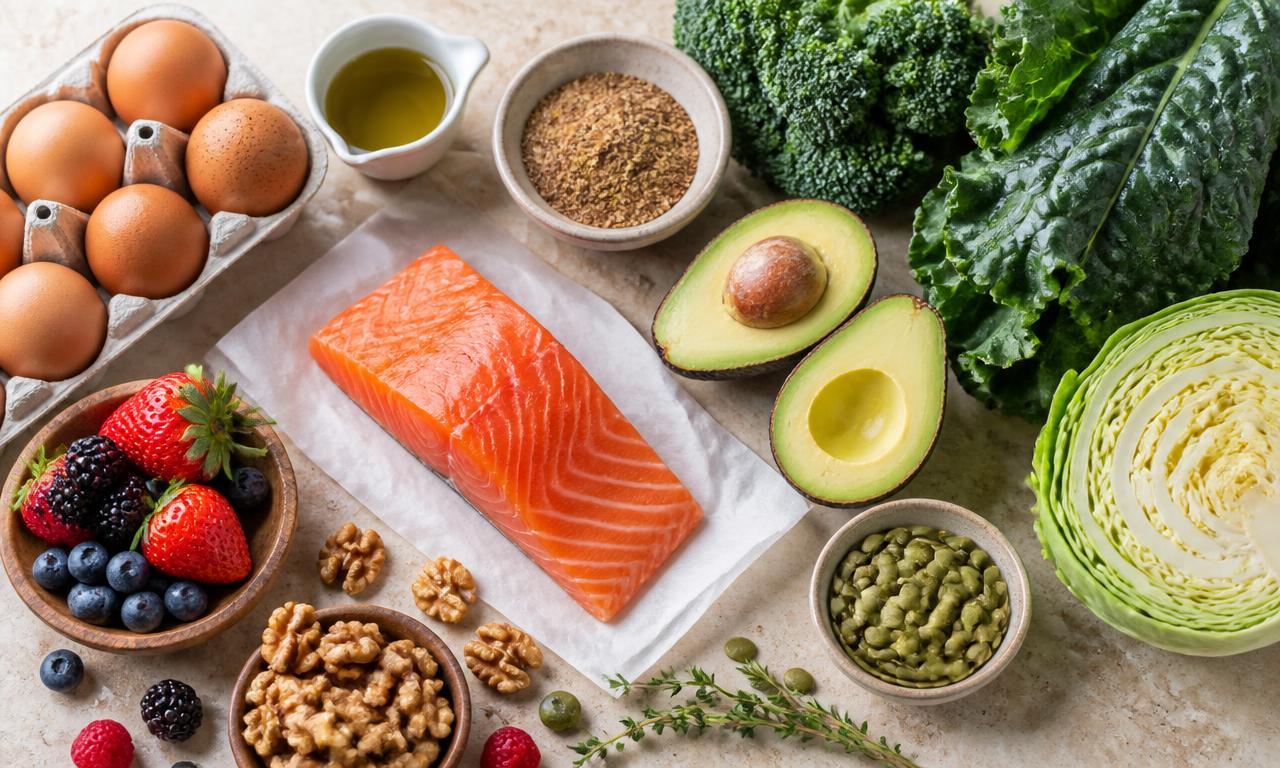
Your hormones are built from what you eat, released on the schedule your meals set, and cleared by organs that depend on nutrients you either supply or do not. That is not a wellness slogan — it is the biochemistry. Cholesterol is the literal starting material for testosterone, estrogen, progesterone and cortisol. Thyroid hormone cannot be made without iodine or activated without selenium. Insulin responds to every meal you eat, and insulin sets the tone for nearly everything else.
At Optimal Body & Health in Mount Vernon and Mansfield, Ohio — with telehealth across the state — we see the same pattern constantly: patients whose labs look borderline, whose symptoms are real, and whose diet is quietly working against the exact system they want fixed. Correcting that does not replace hormone replacement therapy when it is needed. It decides how well it works.
Here is how to eat for the hormones that actually drive how you feel.
Start With Insulin, Because It Sets The Tone
Insulin is the hormone you influence most directly and most often. Every meal moves it. When it stays chronically elevated — from refined carbohydrate, constant snacking, liquid sugar, poor sleep — it pushes on everything downstream.
In women, high insulin drives the ovaries to produce more testosterone, which is the core mechanism in polycystic ovary syndrome: irregular cycles, acne, unwanted hair growth, stubborn weight. In men, the pattern runs the other direction. Insulin resistance and visceral fat increase aromatase activity, converting testosterone into estrogen and lowering free testosterone. It also suppresses sex hormone binding globulin, which distorts what your labs appear to show.
The fix is not dramatic. Build meals around protein and fiber, keep refined carbohydrate and sugar-sweetened drinks occasional rather than daily, stop grazing between meals, and eat your carbohydrate alongside protein, fat and fiber rather than alone. Most patients see cravings and afternoon energy change within two weeks — long before the scale moves.
Eat Enough Fat, And The Right Kinds
Testosterone, estrogen, progesterone, DHEA and cortisol are all steroid hormones synthesized from cholesterol. Decades of fat-phobic dieting left a generation of patients eating in a way that starves that pathway. Very low fat intake is associated with lower testosterone in men, and in women it contributes to cycle irregularity and low progesterone.
What to prioritize: olive oil, avocado, whole eggs including the yolk, oily fish such as salmon, sardines and mackerel, nuts and seeds. Omega-3s from fish deserve specific mention because they lower the background inflammation that interferes with hormone receptor signaling — and inflammation is the reason many patients feel poorly at hormone levels that look adequate on paper.
What to limit: industrial trans fats, and the heavy reliance on refined seed oils that comes with eating mostly packaged and restaurant food. This is about the overall ratio, not eliminating a single ingredient.
Protein At Every Meal, Not Just Dinner
Peptide hormones — insulin, growth hormone, leptin, thyroid hormone — are built from amino acids. Protein also stabilizes blood sugar, preserves the lean mass that keeps your metabolic rate up, and produces the strongest satiety signal of any macronutrient.
Aim for roughly 0.7 to 1 g per pound of goal body weight daily, delivered as 30 to 40 g per meal rather than loaded into one evening meal. That distribution matters more than the total for muscle protein synthesis. Eggs, fish, poultry, lean red meat, Greek yogurt, cottage cheese, lentils and beans all count. This becomes non-negotiable if you are on a GLP-1 — see our GLP-1 diet guide for the specifics — and it underpins results in our medical weight loss program.
Fiber Is How Your Body Gets Rid Of Used Hormones
Making hormones is only half the job. Clearing them is the other half, and it is the half almost nobody addresses. Your liver packages used estrogen for excretion; your gut carries it out. When fiber is low and constipation is present, a bacterial enzyme called beta-glucuronidase can unbind that estrogen and send it back into circulation — the practical mechanism behind heavy periods, breast tenderness, and worsening PMS in patients whose production is normal.
Target 25 to 38 g of fiber daily from a mix of sources: cruciferous vegetables such as broccoli, cauliflower, cabbage and Brussels sprouts, which supply the compounds that shift estrogen toward safer metabolites; ground flaxseed, one to two tablespoons daily, which binds excess estrogen and supplies lignans; leafy greens, berries, beans, lentils and oats. Increase gradually, about 5 g per week, and drink water with it. This is exactly the territory our functional medicine workup investigates when symptoms and labs disagree.
Feed Your Thyroid Its Specific Nutrients
The thyroid needs particular raw materials and will not improvise. Iodine forms the hormone itself, from seafood, seaweed and iodized salt. Selenium converts inactive T4 into active T3 — two to three Brazil nuts a day covers it. Zinc, iron and vitamin A each support conversion or receptor function, and low ferritin is one of the most common reasons a patient with normal TSH still feels hypothyroid.
Two habits sabotage thyroid function more than any food: chronic under-eating and prolonged very low carbohydrate intake. Both lower T3 conversion, because your body reads scarcity and slows metabolic rate deliberately. If you are eating 1,200 calories and feel cold, tired and flat, the problem may be the intake rather than the gland.
Stop Eating In A Way That Raises Cortisol
Cortisol responds to stress, and your body counts several eating patterns as stress: skipping meals for long stretches, aggressive calorie restriction, heavy caffeine intake on an empty stomach, and alcohol in the evening. Elevated cortisol raises blood sugar, promotes visceral fat storage, blunts thyroid conversion, and competes with progesterone for the same precursor — which is why chronically stressed women so often present with low progesterone.
Practical version: eat within an hour or two of waking, include protein at breakfast, keep caffeine to the morning and pair it with food, and treat alcohol as an occasional thing rather than a nightly wind-down. Alcohol is also directly relevant to testosterone — it suppresses production and impairs the liver's ability to clear estrogen.
The Nutrients We Find Low On Labs
Across hundreds of workups, the same handful of deficiencies come up. Vitamin D, functionally a hormone, is low in most Ohio patients we test, particularly from October through April. Magnesium is involved in insulin signaling, sleep quality and cortisol regulation. Iron and ferritin matter for thyroid function and are common in menstruating women. Zinc supports testosterone production and ovulation. B12 is depleted by metformin, acid blockers and low animal-food intake. Omega-3s are low in almost anyone not eating fish regularly.
We test these rather than recommend a generic stack, because supplementing blindly wastes money and occasionally causes harm — excess iodine can worsen autoimmune thyroid disease, and unnecessary iron is not benign.
What This Looks Like On A Plate
Breakfast: three eggs with sauteed spinach and half an avocado, or Greek yogurt with berries, ground flaxseed and walnuts. Protein first, within two hours of waking.
Lunch: a large salad with grilled salmon or chicken, olive oil dressing, plus lentils or quinoa. Protein, fiber, fat, moderate carbohydrate.
Dinner: a palm-and-a-half of protein, two fists of vegetables with at least one cruciferous, and a fist of a starchy carbohydrate such as sweet potato or brown rice.
If you snack: make it protein-forward — cottage cheese, a hard-boiled egg, nuts — rather than a carbohydrate on its own.
When Food Is Not Enough
Nutrition can restore insulin sensitivity, improve cortisol rhythm, support thyroid conversion and help your body clear estrogen properly. It cannot manufacture hormones your body has largely stopped producing. After menopause, or with clinically low testosterone, or with genuine thyroid disease, eating perfectly will improve how you feel without resolving the underlying deficit.
That is where testing and treatment come in — bioidentical hormone replacement, testosterone therapy, peptide therapy, or the comprehensive lab work and 6-month framework in the APEX Protocol™. What eating well does is make every one of those interventions work better, at lower doses, with fewer side effects.
Where To Start
Pick two changes, not ten. Protein at breakfast and a real fiber target will do more in the first month than any supplement. Then get tested, so you are correcting what is actually wrong instead of guessing.
We see patients in Mount Vernon and Mansfield and offer telehealth throughout Ohio. Book a free 15-minute consultation and we will look at your labs, your symptoms and how you are eating together — because they are the same conversation.
Related reading
More articles on the same health topics, plus the care we provide in Mount Vernon and Mansfield, Ohio — with telehealth anywhere in Ohio.

Sep 19, 2026
Functional Medicine & Hormone Optimization in Mount Vernon & Mansfield, OH
Discover how functional medicine and personalized hormone optimization can address fatigue, weight changes, brain fog, sleep problems and low vitality in Mount Vernon and Mansfield, Ohio, with telehealth available statewide.
Read the article →
Jul 6, 2026
How Aging Impacts Hormones: The Science of Hormonal Change and How to Feel Like Yourself Again
A complete, science-backed guide to how aging affects estrogen, testosterone, thyroid, cortisol, growth hormone, insulin, and melatonin — and the functional medicine, BHRT, TRT, peptide, and medical weight loss options available at Optimal Body & Health in Mount Vernon and Mansfield, Ohio.
Read the article →
Sep 20, 2026
Thyroid Symptoms, Fatigue & Weight Gain: A Guide for Mount Vernon & Mansfield, Ohio
Tired, cold, foggy or struggling with unexplained weight changes? Learn how thyroid function is evaluated, what symptoms can mean, and where functional medicine fits in Mount Vernon and Mansfield, Ohio.
Read the article →
Aug 15, 2026
Diet, Eating Right, and Your Hormones: How Food Shapes the System That Runs Your Body
How what you eat directly drives hormone balance — the foods that stabilize insulin, cortisol, thyroid, and sex hormones, the patterns that quietly throw them off, and a practical plate-by-plate plan from Optimal Body & Health in Mount Vernon and Mansfield, Ohio.
Read the article →