
Wellness Blog
The Complete GLP-1 Diet Guide: What to Eat for Optimal Results
 Cindy Viers, DNP · August 24, 2026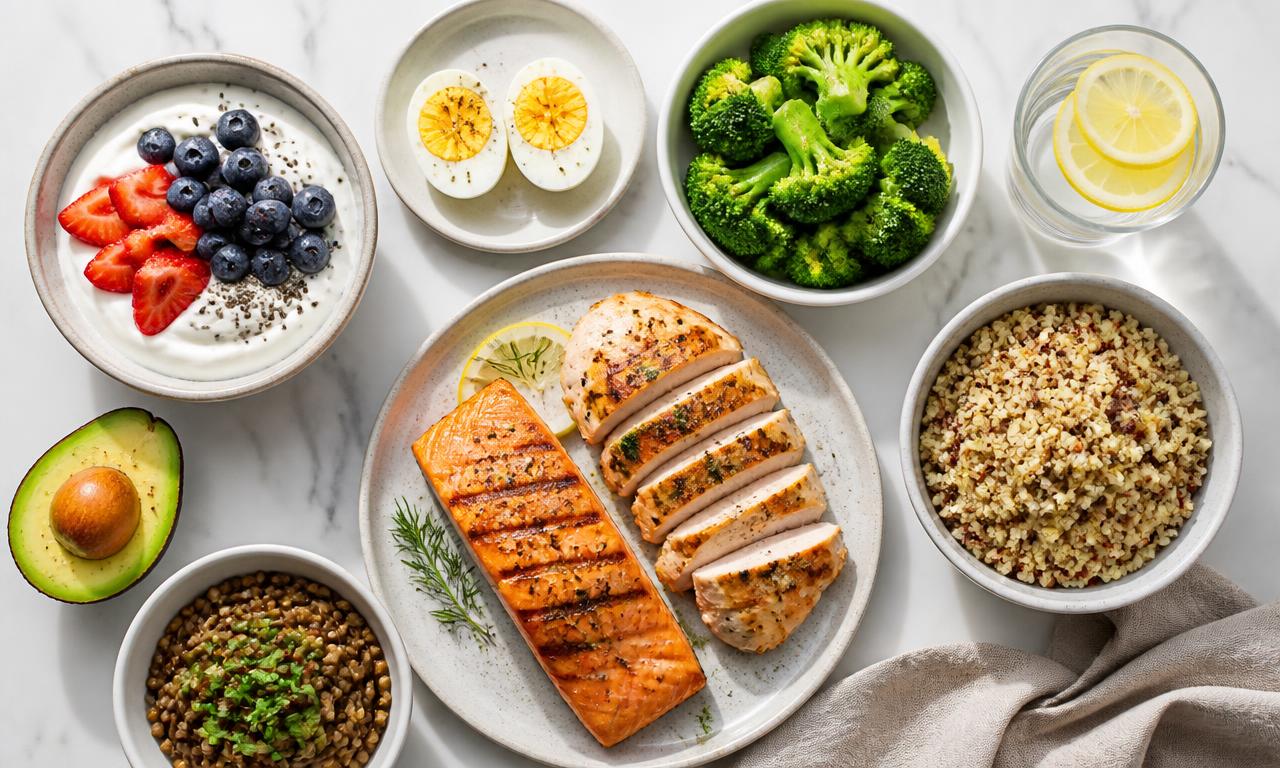
The medication handles your appetite. What it does not handle is what happens to your body while the weight comes off — and that is where nutrition decides whether you finish this process leaner and stronger, or lighter and depleted.
At Optimal Body & Health in Mount Vernon and Mansfield, Ohio — with telehealth available across the state — we prescribe and monitor GLP-1 therapy every day inside our medical weight loss program. The patients who get the best results are almost never the ones on the highest dose. They are the ones who eat like the medication is a tool rather than a solution.
This is the full guide: how these medications change eating, exactly how much protein you need, what to put on the plate, how to manage nausea and constipation with food, and where the real risks sit.
Why Nutrition Decides the Outcome
Appetite drops sharply on semaglutide or tirzepatide, weight follows, and the scale rewards you weekly. But your body does not distinguish between eating less because you planned to and eating less because food stopped appealing to you. In the second case, the composition of what you lose changes.
In published semaglutide trials, a meaningful share of total weight lost — often cited around a third — came from lean body mass rather than fat. Lean mass is not all muscle, and losing some alongside fat happens in any substantial weight loss. What is different here is the size of the total, which makes the absolute amount larger than most people have experienced before.
Lower protein intake tracks with greater muscle loss on these medications, and the risk is higher in people who are older and in women. That is exactly why we build nutrition, lab monitoring, and body-composition tracking into every plan rather than simply writing a prescription. Our functional medicine workup is often where we catch the deficiencies that low intake creates.
How These Medications Change Eating
GLP-1 medications — semaglutide (Ozempic®, Wegovy®) and tirzepatide (Mounjaro®, Zepbound®) among them — mimic a hormone your gut releases after eating. They slow gastric emptying, prompt insulin release, and reduce appetite substantially. Three practical consequences follow, and each has a nutrition answer.
Food sits longer. That is the mechanism, not a side effect. It is why dietary fat and sheer meal volume become the two variables that decide whether a meal feels fine or awful, and why nausea and reflux top the complaint list.
Total intake drops, so nutrient density per bite matters more. A meaningful minority of people starting GLP-1 therapy develop a nutritional deficiency within the first year — vitamin D most commonly, along with iron, B12, and magnesium. This gets very little attention relative to how common it is, which is why we run labs rather than guess.
Lean mass comes off alongside fat. Which is addressable through protein, resistance training, and in some cases adjunctive support such as peptide therapy or optimized hormone levels.
The Five Core Principles
1. Protein first, at every meal
Protein is the non-negotiable. The behavioral rule is simpler than the arithmetic: eat the protein component before anything else on the plate. Fullness arrives early and without much warning on these medications, and you want it arriving after the protein rather than instead of it.
2. Fiber, increased gradually
Fiber supports the fullness the medication already provides and counters the constipation that comes with slowed gut motility. Work up to 25–38 g daily, but increase by no more than about 5 g per week — going too fast makes bloating worse, which is the opposite of the intended effect. Leafy greens, broccoli, berries, apples, Brussels sprouts; beans, lentils and chickpeas, which bring protein alongside; oats, quinoa and brown rice. Drink water with it, because fiber without fluid makes constipation worse rather than better.
3. Carbohydrates, chosen for fiber
Carbs are not the problem on a GLP-1 — refined ones are. Whole grains, starchy vegetables, legumes and whole fruit all provide sustained energy plus the fiber you need. Juice is worth avoiding specifically, because it concentrates the sugar and strips the fiber that made the fruit useful.
4. Fat, moderated rather than eliminated
You need fat for hormone production and to absorb fat-soluble vitamins, and that matters more when total intake is low. But fat slows gastric emptying, and on a medication that already does that, a high-fat meal is the most reliable way to feel unwell for three hours. Choose unsaturated sources — olive oil, avocado, nuts, oily fish — keep added fat to roughly one or two tablespoons per meal, and spread it across the day.
5. Fluids, deliberately
Reduced appetite tends to blunt thirst cues too, and less food means less fluid from food. Sip through the day rather than drinking large volumes at once, and keep drinking between meals rather than during them — liquid fills the stomach space you needed for protein. Pale urine is the practical indicator.
Protein and Muscle: The Numbers That Matter
This is the section worth reading twice, because the numbers circulating online are inconsistent and several are wrong.
The working target
Current multi-society nutrition guidance for GLP-1 therapy gives two usable targets during active weight reduction:
- 1.2 to 1.6 g of protein per kg of body weight per day. For an 82 kg (180 lb) adult, roughly 98–131 g.
- Or a flat 80 to 120 g per day — offered explicitly as an alternative that improves adherence. A simpler number people actually hit beats a more precise one they abandon.
Two boundaries also worth knowing: intake should not drop below roughly 0.4–0.5 g/kg/day, and sustained intake at or above 2 g/kg/day is not recommended.
The caveat nobody mentions
For people with obesity, it is genuinely unclear whether the per-kilogram target should use actual body weight, adjusted weight, or fat-free mass — and using actual weight can significantly overestimate what you need. If you weigh 130 kg, multiplying by 1.6 gives 208 g, a number that is both unreachable on a suppressed appetite and probably higher than necessary. That is precisely why the flat 80–120 g alternative exists. A target of about 1.5 g per kg of lean mass is more accurate, but it requires a body composition measurement — something we take at intake and repeat through your program.
Distribution
Hitting the daily total is only half of it. Aim for 20 to 40 g at each eating occasion, four or five times a day. That range is where muscle protein synthesis is maximally stimulated — 60 g in one sitting is not twice as useful as 30 g, and stacking protein into dinner wastes most of it. It is also the easier route to your target when appetite is low: five servings of 25 g is far more achievable than three of 40.
Training is not optional
Protein supplies the raw material; resistance training supplies the signal to keep the muscle. Two to three sessions a week covering the major movement patterns is enough for most people. Alongside that: lose weight at a moderate rate rather than the fastest possible, sleep properly, and track body composition rather than scale weight alone. The scale cannot tell you which tissue you lost.
What to Eat
| Category | Best choices | Protein | Why it works here |
|---|---|---|---|
| Lean proteins | Chicken, turkey, cod, tilapia, salmon, tuna, shrimp | 25–30 g per 4 oz | High protein, low fat, easy on a slowed stomach |
| Eggs & dairy | Eggs, Greek yogurt, cottage cheese | 6–20 g per serving | Low volume for the protein; often tolerated when little else is |
| Plant proteins | Tofu, tempeh, edamame, lentils, beans, chickpeas | 8–18 g per serving | Fiber and protein in the same food |
| Whole grains | Oats, quinoa, brown rice, whole-wheat bread | 4–8 g per serving | Sustained energy plus fiber for motility |
| Vegetables | Spinach, broccoli, peppers, tomatoes, carrots | 2–5 g per cup | Micronutrient density when total intake is low |
| Fruit | Berries, apples, oranges, banana | 1–2 g per serving | Fiber and vitamins — whole fruit, not juice |
What to limit: fried and heavily greasy food, cream-based dishes, very spicy dishes, added sugars, carbonated drinks, and large portions of anything at all — including the foods above.
Managing Side Effects Through Food
Nausea
The most common complaint, worst during initiation and after each dose increase. Smaller portions eaten slowly — twenty to thirty minutes a meal, fork down between bites. Stop at comfortably satisfied rather than full; the gap between the two is now about three bites wide. Bland and protein-rich works: eggs, plain chicken, turkey, tofu. Cold or room-temperature food is frequently better tolerated than hot. Ginger tea, plain crackers, and protein shakes when solid food is not happening. Avoid greasy, fried, very spicy or strong-smelling food, and stay upright for a couple of hours after eating.
Constipation
Slowed gut motility is the mechanism, so this affects a lot of people. Increase fiber gradually — about 5 g a week toward 25–38 g daily — from beans, oats, berries, leafy greens, chia and flax. Drink enough water for the fiber to work with, eight to ten cups. Warm drinks in the morning help, as does movement: even a ten-minute walk after meals stimulates motility. Magnesium citrate at night is often the simplest fix, and one we frequently recommend.
Reflux
Food sitting longer in the stomach makes reflux likelier. Keep meals small, finish dinner two to three hours before bed, moderate coffee and alcohol, elevate the head of the bed if it is worse at night, and identify your personal triggers rather than assuming the standard list applies.
Loss of appetite
This is not a good problem, and treating it as one is how people end up under-nourished. When you cannot eat much: liquid nutrition counts, so protein shakes and smoothies with fruit and greens are legitimate meals. Focus what you can manage on protein and vegetables. Eat on a schedule rather than waiting for hunger cues that may not come. And do not skip meals entirely — a small shake beats nothing. If intake stays very low for more than a few days, tell us; that usually means the dose is ahead of you.
When to Contact Your Provider
Severe or persistent abdominal pain, particularly if it radiates to your back; persistent vomiting or diarrhea; inability to keep food or fluids down for 24 hours or more; signs of low blood sugar if you also take diabetes medication; or any symptom significantly affecting daily life. Side effects should be manageable. If they are not, your dose may need adjusting — and that adjustment is a conversation, not a reason to quit.
Meal Timing & Frequency
Four to five smaller eating occasions beats three larger ones for most people on these medications, for three reasons that compound: smaller portions sit better in a slowed stomach, protein distributes better across more meals, and reaching a daily target is easier in five 25 g servings than three 40 g ones when appetite is suppressed.
A workable schedule: breakfast around 7:30 (25–30 g protein), a mid-morning snack at 10:30 (15–20 g), lunch at 1:30 (25–30 g), an afternoon snack at 4:00 (15–20 g), and dinner at 7:00 (25–30 g). Adjust the clock to your life; keep the spacing at roughly three to four hours.
Around training, have a small protein and carbohydrate snack an hour or two before, and 20–30 g of protein within a couple of hours after. Total daily protein matters more than precise timing, but the post-session meal is an easy one to hit. In the evening, finish dinner two to three hours before bed and keep it moderate rather than making it your largest meal.
Shopping & Meal Prep
The goal is having tolerable, protein-dense options available on the days when cooking is not going to happen — which is most of the value of prep on a GLP-1.
Worth always having in: chicken breast, lean ground turkey, salmon or cod, canned tuna, plenty of eggs, plain Greek yogurt, cottage cheese, tofu, protein powder, and a rotisserie chicken when you can get one. Spinach and mixed greens, broccoli, cauliflower, peppers, and frozen steam-in-bag vegetables. Oats, quinoa, brown rice, sweet potatoes, beans. Berries fresh or frozen. Olive oil, avocado, pre-portioned nuts, nut butter.
Prep components, not meals. This is the key adjustment. Bake two or three pounds of plain chicken, hard-boil a dozen eggs, cook a batch of grain, roast a couple of sheet pans of vegetables, and portion everything separately. Complete pre-made meals assume you will want that specific thing on Thursday, and on a GLP-1 you often will not. Components let you assemble whatever sounds tolerable.
On budget: eggs remain the cheapest complete protein, canned fish is shelf-stable and cheap, large tubs of Greek yogurt beat individual cups, dried beans beat canned, and chicken thighs cost less than breasts while still being lean enough.
Common Mistakes
- Not eating enough protein. When appetite drops, protein is usually the first thing to go — a banana for breakfast, a skipped lunch, a small salad for dinner, maybe 30 g for the whole day. This is the mistake that costs you muscle.
- Going too low on calories. Some people read appetite suppression as permission and land at 800–1,000 calories a day. That accelerates muscle loss, causes fatigue, and makes regain likelier when the medication stops.
- Skipping meals because hunger never arrived. Your cues are unreliable now. Eat on the clock.
- Forgetting fiber while focusing on protein, then wondering about the constipation.
- Eating pre-medication portion sizes and feeling wretched for hours afterward.
- Forgetting to drink, because reduced appetite dampens thirst too.
- Living on shakes and a multivitamin instead of food, which misses the fiber and phytonutrients whole food provides.
- Ignoring hormones. Low testosterone, untreated thyroid dysfunction, or perimenopausal shifts will blunt your results no matter how well you eat.
Where Hormones Fit Into This
A GLP-1 lowers appetite. It does not correct an underactive thyroid, low testosterone, insulin resistance driven by hormonal decline, or the muscle-loss curve that follows menopause. When patients plateau on a GLP-1, the cause is frequently sitting in a hormone panel nobody ordered.
That is why our weight loss patients are also evaluated for bio-identical hormone replacement and, for men, testosterone therapy — both of which directly influence how much lean mass you keep while losing fat. Some patients add lipotropic injections for metabolic and energy support, or peptide protocols aimed at recovery and body composition.
For patients who want all of it structured into one supervised six-month arc — labs, medication, nutrition, hormones, and follow-up — that is the APEX Protocol™.
Safety & Medical Considerations
This is educational content, not medical advice. Follow your prescriber's instructions for your specific medication.
Label warnings include a thyroid C-cell tumor warning (avoid with a personal or family history of medullary thyroid carcinoma or MEN2), pancreatitis risk — seek immediate care for severe abdominal pain — gallbladder disease, and dehydration or acute kidney injury with persistent vomiting or diarrhea.
Interactions. Oral contraceptives may be less effective around tirzepatide initiation and each dose increase; use a non-oral or added barrier method for four weeks after each change. GLP-1s can raise hypoglycemia risk alongside insulin or sulfonylureas. Tell any surgeon or anesthesiologist that you are on a GLP-1 before a procedure, because delayed gastric emptying affects fasting instructions.
The Bottom Line
Eat protein first, four or five times a day, at 20–40 g a serving toward 80–120 g daily. Build fiber up slowly. Keep fat moderate and spread out. Drink between meals. Lift something heavy twice a week. Eat on a schedule instead of waiting for hunger. Get labs, not guesses.
Do that, and a GLP-1 stops being a temporary appetite suppressant and becomes what it should be: the assist that makes a permanent metabolic change possible.
Ready to do this with clinical oversight? Contact Optimal Body & Health in Mount Vernon or Mansfield, Ohio, or call 740-263-7178. Telehealth is available statewide.
Related reading
More articles on the same health topics, plus the care we provide in Mount Vernon and Mansfield, Ohio — with telehealth anywhere in Ohio.

May 5, 2026
Why Medical Weight Loss Works When Diets Fail: A Science-Based Approach
If you’ve tried dieting over and over again—cutting calories, eliminating carbs, hitting the gym—and still can’t lose weight (or keep it off), you’re not alone. The truth is, most diets fail not because of lack of effort—but because they ignore the biology behind weight gain. This is where medical w
Read the article →
Dec 21, 2025
The Science of Lasting Transformation
How GLP-1 and Hormone Optimization Redefine Weight Loss Introduction: Moving Beyond the Scale at Optimal Body & Health For countless individuals, the journey to lose weight is paved with frustration, short-term victories, and long-term disappointment. If you’ve tried every diet, counted every calori
Read the article →
Nov 11, 2025
Unlocking Sustainable Weight Loss with Semaglutide at Optimal Body & Health
At Optimal Body & Health, with locations in Mount Vernon (60 Parrott Street, Suite B, Mount Vernon, OH 43050) and Mansfield (1183 Lexington Avenue, Mansfield, OH 44907; phone: (740) 263-7178), we’re committed to helping clients achieve meaningful, lasting weight-loss results. One of our most effecti
Read the article →
Oct 2, 2026
Menopause and Hormone Therapy: A Complete Guide for Women in Mount Vernon & Mansfield, Ohio
A clear, clinician-guided guide to menopause symptoms, perimenopause, bio-identical hormone therapy, benefits, risks and who is a good candidate — with local care in Mount Vernon and Mansfield and telehealth across Ohio.
Read the article →